


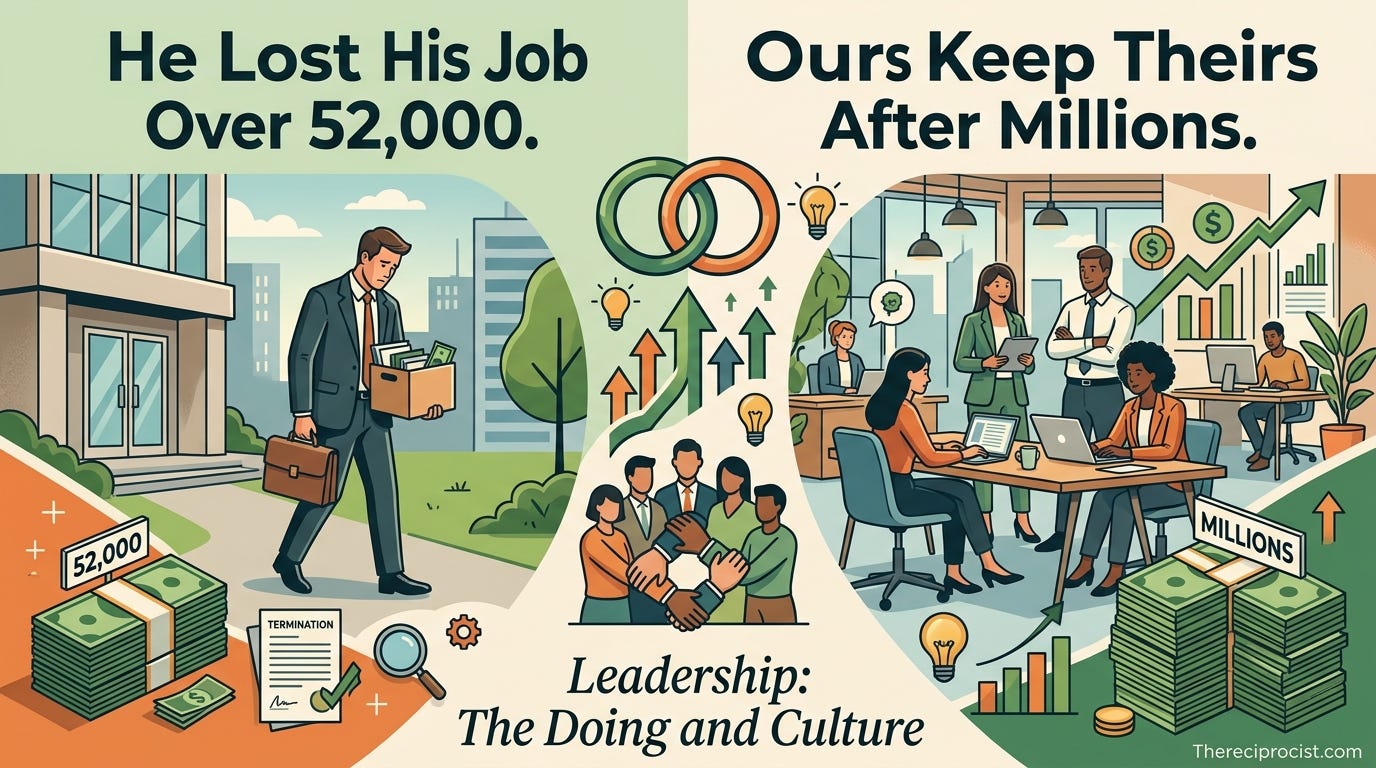
I read with interest a report that United States Health and Human Services Secretary Tom Price agreed to reimburse U.S. taxpayers for his use of private charter planes on official travel. At first, it did not mean much to me — I could not internalize the inner workings of operating on principles and attributes like conscience, fidelity, integrity, compassion, courage, responsibility and justice.
Then I looked closer, and what actually happened stopped me cold. Price had racked up over $400,000 in taxpayer-funded charter flights. Under mounting pressure, he offered to repay roughly $52,000 — the cost of a coach seat, not the charter bill. It wasn’t even close to full restitution. And it still wasn’t enough. The very next day, he resigned.
Read that again. A partial, face-saving reimbursement — and it still cost him the job.
I could not adopt or apply any emotions behind this, because this is not a common occurrence in societies such as this, God’s own country. A highly placed official, in an OFFICIAL capacity and OFFICIAL DUTY, resigning over a private jet, in an administration built on the doctrine of “stick to the gun and apologize for nothing.” Wow! Wait a minute mhen!
You Agree
Yes, you too, right? Thinking what I am thinking, right?
What if this was a third world country? What if this was Nigeria? What if this was a minister, a governor, a senator, or even a military officer in ANY administration in Nigeria? Would repayment — let alone resignation — ever be on the table?
We know the answer before we finish asking the question. Admitting it happened would be up for grabs. Debate over whether it was “official duty” would drag on for years. Discussion of cheaper alternatives would be dismissed as irrelevant. The matter-of-fact truth, in Nigerian parlance, is the in-your-face culture that has become so normalized that doing otherwise would be the deviation — Attitude.
Now hear this. “Civilization,” Jim Rohn said, “is the intelligent management of human emotions.” Emotions govern our attitudes, and our emotions are the puppet master pulling the strings of our projected feelings — our behaviors, our characters, our communications, our utterances, and our relationships with ourselves, our families, our business partners, our colleagues, the people we govern and legislate for, and most especially, the people who have put their fate in our hands.
What Our Emotions Do
Our emotions control our habits. Stephen Covey defined a habit as the intersection of Knowledge, Skill, and Desire — and when the emotional foundation beneath all three is rotten, so is everything built on top of it.
What We Have Seen
We have seen it, named and documented, again and again.
We saw Governor Abiola Ajimobi of Oyo State, confronted by LAUTECH students protesting the university’s prolonged closure in January 2017, tell them to “go and do your worst” — a moment so contemptuous it went viral, forced a public apology, and still didn’t reopen their school any faster.
We saw Senator Dino Melaye of Kogi West claim degrees from Harvard, the Kennedy School, and the London School of Economics — degrees those very institutions publicly said he never earned — while cultivating a lifestyle of designer suits and a car collection so ostentatious it became a national punchline, even as his constituents asked, and never really got an answer to, the simple question: how?
We saw Governor James Ibori of Delta State walk free of corruption charges at home, hailed and celebrated, only to be convicted in a United Kingdom court of laundering the very money he stole from his own people. Innocent in Nigeria. A convict in a “more civilized society,” as we like to say — conveniently forgetting that the crime happened here, on us, first.
I could go on. I am not going to.
Questions That Need Answers
Which direction are developing countries directing their gazes? What do they know? What do they not know? What do they want to know? How are they going about finding out what they want to know?
Leadership: What Is It
The leadership of self and others begins with self. There are many attributes to leading — to becoming a leader, to being the led, to being a follower. Is it not time we ask the TOUGH QUESTIONS? Is it not time we ask what we are, and who we are? My belief is that what differentiates humans from the ants, the spiders, the lions and the tigers, and every other animal, is reasoning and choice. The choice to do — and to do that which is right, right by us, and right for us. To adjust the sail when the wind shifts. To look at what was, weigh it against what is, and build what will be. Perception. Demand. Construct.
Let’s stop asking the tough questions we already know the answers to. We know the problem is not a lack of intelligence in our public square — it is a glaring lack of composure in our corridors of power. And composure does not only look like panic. Sometimes it looks like a governor screaming at students in a town square. And sometimes it looks like a senator whose fabricated Harvard and LSE credentials were publicly debunked by the very institutions he named — and who wore the exposure like a badge instead of a wound. Frantic energy and cold impunity are not opposites. They are two dialects of the same disease: a leader who has never built an internal center of gravity, and so either panics in public or performs invincibility in public, because there is nothing steady underneath either mask. We have seen the reckless spending, the threats, the taunts, the kingly welcomes for convicts. We have diagnosed the disease. It is emotional negligence — dressed sometimes in a governor’s agbada, and sometimes in a senator’s Balenciaga.
Nigeria has no business being poor, and Nigerians have no business being spectators to their own poverty — but we will remain trapped in this cycle as long as our leadership runs on frantic energy or hollow bravado instead of emotional sovereignty. The paradigm shift we desperately need will not be legislated by a corrupt parliament; it must be cultivated in the hearts of those who lead. It demands leaders who are not merely decision-makers, but infrastructure — human beings steady enough to be the metronome for a nation in chaos.
This is exactly what we are building at TheReciprocist.com. We are done with the endless lament. We are not here to merely critique — we are here to cultivate. We are training a generation of leaders to hold emotional gravity, to master their internal pulse, so that their organizations, their communities, and this country can finally find their center of mass.
Stop analyzing the collapse. Start building the cohesion.
Join us. Visit TheReciprocist.com today, and become part of the movement that replaces panic — and its quieter cousin, impunity — with purpose. The time for philosophical debate is over. The time for sovereign leadership is now. The well is waiting. Let’s set a new tempo — together.
Subscribe if this made you think differently — that’s usually the sign it was worth writing.
OJI - Thereciprocist